
Learn about what a needs analysis is, and how this process underpins all aspects of any performance strategy.
Throughout this website we will be providing details of a broad range of practical strategies to improve soccer performance. As individual player requirements will differ, to be able to provide effective and relevant practical strategies, we must first understand the context in which we are working. The first step towards providing strategies and interventions is to undertake a needs analysis. This is simply a process where you consider the underlying contexts of the sport and player/team, starting in a general sense and becoming more detailed, until you have a clear picture of what you are working with. From here we can identify areas of improvement, and plan intervention strategies accordingly.
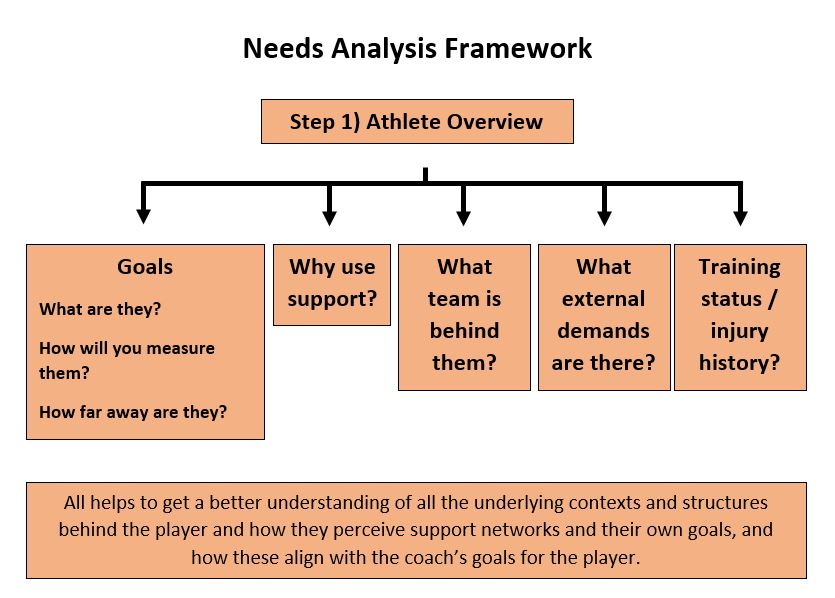
Using a recently published framework [55], the first thing we must look at is our athlete overview. This section is where we look to understand what goals the player has, how they are already working towards them, and how far away from these goals they are. Ideally these goals should be SMART (specific, measurable, adjustable, realistic, time-orientated). We should also try to understand why the player wants support, what their previous experience with support is, and what staff and coaches they have behind them. This is also where we figure out the individual contexts and demands that the player may have; this includes training status, injury history, training history, and any other external demands. All of this aims to give us an understanding of the individual we are looking at. The framework for the athlete overview is shown below.
The next section is the needs analysis, and this is where we look at soccer in a more general sense. Here we can get into a very detailed, scientific understanding of the game and its demands. We will need to detail the rules of the sport, what environments the player is likely to be playing and training in, and how these will affect the physical demands. We must also get a good understanding of the physiological demands from scientific research, and existing data, to inform our testing and training procedures. Following this we can start to create a testing battery that is based on the demands of the game and what makes a good player from a physiological point of view, and start to attach these tests to the goals set out in the previous section. Everything we do in each step must follow a logical process and compliment the player’s goals. The needs analysis framework is shown below.

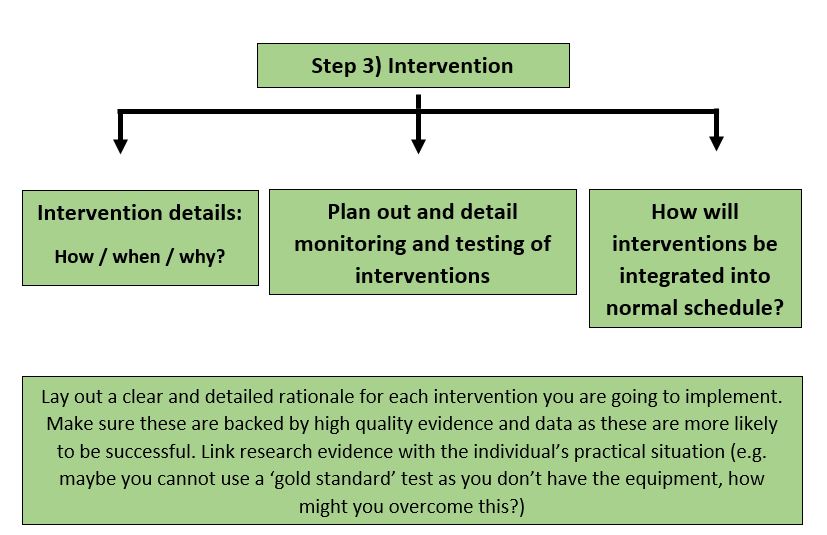
After this, the next section is the intervention planning section. This is where we use our athlete profile and needs analysis to lay out a clear and well-defined plan of the targets of the intervention, how we will measure and monitor these, and what changes we want to see. This section should be heavily evidence-based to have the best chance at being successful and should be adapted to suit any practical constraints the player faces. This is also where we plan how the interventions and strategies will be integrated into the player’s schedule, and how any existing staff will be communicated to and informed. The final, and most important part of this, is to detail how to get player buy in, and make sure the player is fully informed. The intervention planning framework is shown below.
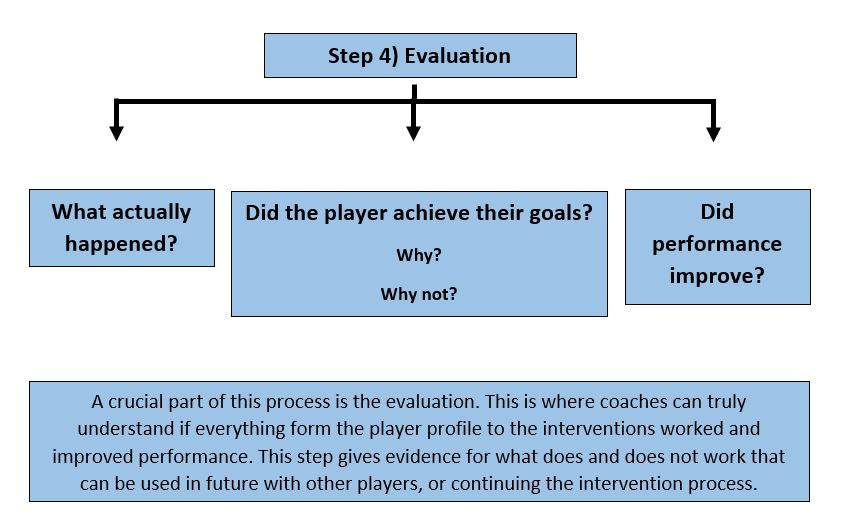
The final section is the evaluation section, where we look at the results of our interventions and draw conclusions from these results. Here we answer the questions of were the goals achieved? If so, why, and if not, why not? What occurred during the intervention and is this what was planned? What were the main findings, were there any unexpected results? Aim to present the data in a way which the player can understand and learn from. It is crucial that the player and their support staff see the practical benefit of the interventions, and how these have improved performance. These results can inform future interventions for the same or different players, and offer real-world data. The framework for the evaluation section is shown below.
 Science of Soccer